

TL;DR
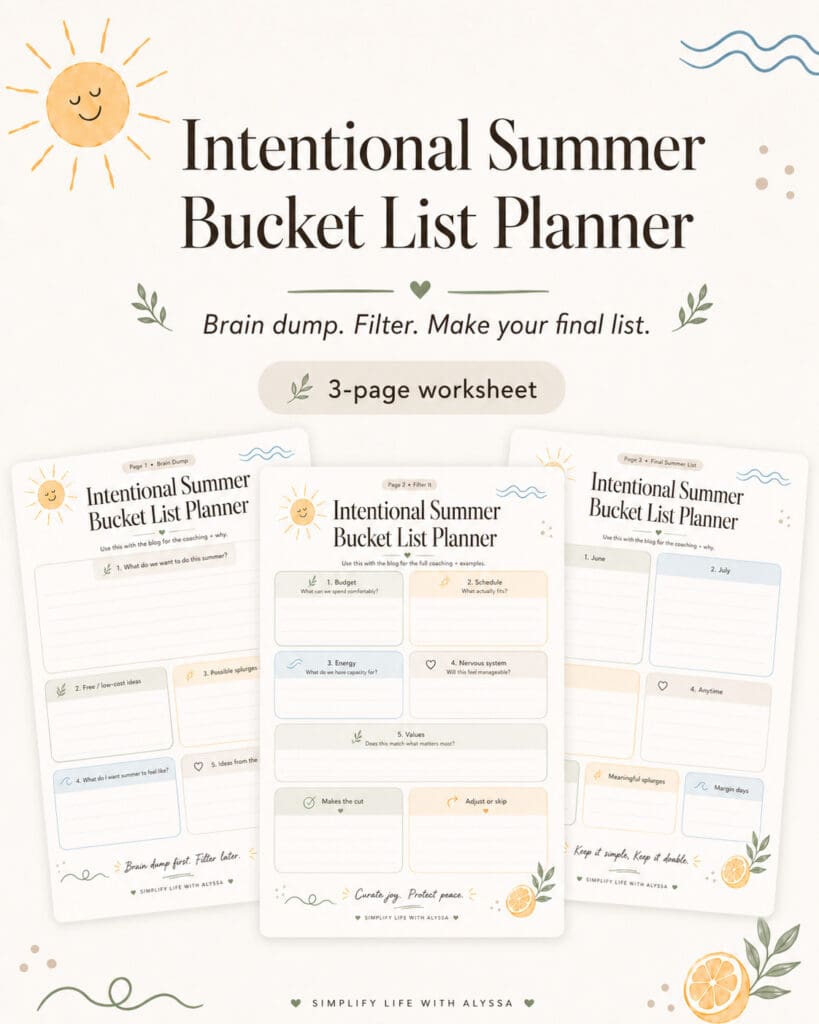
- Download my free Intentional Summer Bucket List Planner Worksheet
- Planning your summer bucket list intentionally means filtering it — not just filling it
- A family wish list + a reality check is the process that actually works
- Budget, schedule, energy, nervous system, and values are the five filters that matter
- A smaller, realistic list leads to a more present, connected summer than an ambitious one you white-knuckle through
- The Decision Filter freebie is the tool to run every task and commitment through — not just summer
Picture two versions of the last day of August.
Version one: You did everything on the list. Every camp, every trip, every activity you pinned in January. You’re exhausted. You snapped at your kids more than you’d like to admit. Your credit card knows exactly what you did this summer. And somehow, sitting here at the end of it, you feel like you missed it.
Version two: The list was shorter. A lot shorter. But you were present for every single thing on it. You laughed more. You said yes to spontaneous things because the baseline was manageable. You didn’t spend August recovering from July.
When you’re planning your summer bucket list intentionally, you’re choosing which version you’re planning for.
Why Summer Plans Fall Apart (It’s Not a Motivation Problem)
Over-commitment happens quietly. It happens in January when you’re pinning ideas with your coffee hot and your energy high. It happens in May when every activity signup email lands in your inbox. It happens the moment someone asks “what are you doing this summer?” and you feel the pressure to have an impressive answer.
By the time summer arrives, the calendar is full. The budget is stretched. And the version of yourself you planned for — rested, present, patient — got buried under the weight of everything you said yes to.
This isn’t a willpower problem. It’s a planning problem. And it’s fixable.
Start With the Wish List — Then Reality-Check It
In our family, summer planning starts with a conversation. Everyone gets to share what they’d love to do this summer — no filters, no “we can’t afford thats,” just ideas on the table.
Then we run it through reality.
This isn’t about saying no to everything. It’s about saying yes to the right things. The goal is a list that fits your actual life — your budget, your schedule, your energy, your nervous system — not the life you’re aspiring to have.
Getting kids involved (age-appropriately) matters too. When they’re part of the planning, they’re more bought in. And when things don’t make the cut, it’s easier to explain why.
The 5 Filters Every Summer Commitment Should Pass Through
Before anything goes on the official list, run it through these five questions:
1. Budget
What can you spend this summer without the financial hangover? Be honest — not aspirational. Debt that takes months to recover from is not a summer win, no matter how magical the memories looked on Instagram.
2. Schedule and timing
What does your work calendar actually allow? Your partner’s? Are there weeks that are already full? A beautiful activity planned during a work crunch is an activity that will stress you out.
3. Energy and health
What is your family’s capacity right now, in this specific season? Not last summer’s capacity. This one. Health, circumstances, workload — all of it counts.
4. Nervous system
Especially relevant for moms who are already running at capacity and for sensitive kids. A packed summer can feel like thriving on paper and feel like drowning in real life. Build in margin.
5. Values alignment
Does this actually reflect what matters to your family? Or is it on the list because someone else is doing it? The most meaningful summer moments are often the simplest ones — but only if you protect them.
Want a PDF Planner for All of This? I Made One.
It’s free, printable, and oh-so cute! You can get it here!
What Intentional Summers Actually Look Like
I’ll be honest with you: there have been seasons of our lives where big vacations weren’t possible. Multiple trips, elaborate plans — just not where we were.
And something surprising happened. We got more creative. More intentional. We found things that were genuinely meaningful because they were chosen on purpose, not because they were impressive.
Those summers — the quieter, smaller ones — are the ones my son talks about. Not the biggest moments. The most present ones.
A smaller list isn’t a lesser summer. It might be the truest one you’ve ever had.
Building the Actual List
Once you’ve run the wish list through the filter, you build from what survived.
A few things to keep in mind:
- Mix free or low-cost moments with one or two meaningful splurges — the ratio matters
- Build in unscheduled days on purpose — these are often where the best memories happen
- Don’t stack everything into one month and leave another empty
- Include something for each person — the kids’ wishes and yours
Need ideas for the free side of the list? Read this blog post.
FAQ
Here’s the process that works: Sit down together and let everyone share what they’d love to do — no limits yet. Write everything down without judgment. Run the list through your five filters: budget, schedule, energy, nervous system, values. Remove or adjust anything that doesn’t pass the filter. Organize what’s left by month or by type (free, low-cost, splurge). Post the list somewhere visible so kids can see it and look forward to things. The visible list does double duty — it gives kids something to anticipate and gives you something to point to when they ask “what are we doing today?”
Run every item through the five filters above before it makes the list. The filter that trips most families up is energy — they plan for the version of themselves that feels great, not the version dealing with a work deadline, a sick kid, or an exhausting week. Plan for the real you, in the real season you’re in. That’s what makes a list realistic instead of aspirational.
Start with free. Local parks, splash pads, library summer reading programs, nature walks, neighborhood events — most communities have more free summer options than families realize. Then add one or two intentional paid activities that align with your values. A budget-friendly summer isn’t a boring summer. It’s a filtered one.
The goal of an intentional summer bucket list isn’t to do less. It’s to be present for what you do.
The Decision Filter is the tool that makes that easier — not just for summer, but for every commitment on your plate. It’s free and it takes five minutes. Download the Decision Filter here.