

TL;DR
- I gamify my grocery budget and only spend what I’ve allotted. Copilot keeps me honest.
- I split my shopping: produce and meat at Publix (especially BOGO to freeze), everything else at Walmart pickup.
- Pickup saves me money because I see the cart total climb and skip the impulse buys.
- The 6-to-1 method is a simple way to shop with a plan instead of vibes.
- The biggest saver is planning to a number, so nothing gets bought “just in case.”
Confession: I treat my grocery budget like a game I’m trying to win. Every dollar has a job, and going over feels like losing a level. (Competitive? Me? Never.)
That mindset carried us through a season when money was genuinely tight and I was determined to feed us well without blowing the budget. So here’s the honest, real-life version of how to save money on groceries for a family, from someone who tracks every dollar. I’m Alyssa Rowe, and making the numbers work is basically a love language over here at Simplify Life.
How can I save money on groceries for my family?
The most reliable way to save money on groceries is to plan your meals first, set a spending number, and shop that number on purpose. Everything else is a bonus on top of those two moves. I keep my number honest with a budgeting app called Copilot, so I always know where I stand before I check out.
Here’s my actual system:
- I split my stores. Produce and meat come from Publix, because our local budget option isn’t reliable on produce and quality matters to me. Everything else comes from Walmart.
- I shop the BOGOs and freeze. When Publix runs buy-one-get-one deals, I build meals around them and freeze the extras. That one habit stretches the budget more than anything.
- I use pickup on purpose. Walmart pickup saves me money because I’m not wandering the aisles loading up on things I don’t need, and I can watch my cart total climb in real time. Time is money, and so is a cart I can actually see.
- I let Instacart earn its keep. For Publix, I use Instacart because there’s no pickup fee. Yes, items run slightly higher, but paired with BOGO deals it still comes out ahead, and my produce is quality.
Here’s my split at a glance:
| Where I shop | What I buy there | Why it saves money |
|---|---|---|
| Publix (in-store or Instacart) | Produce, meat, and BOGO deals to freeze | Reliable quality, no Instacart pickup fee, and BOGOs stretch the budget |
| Walmart (pickup) | Everything else: pantry, staples, household | Cheapest for basics, and pickup kills the impulse buys |
What is the 6-to-1 grocery method?
The 6-to-1 grocery method is a simple shopping formula: grab six vegetables, five fruits, four proteins, three starches, two sauces, and one fun item. It’s popular because it forces you to shop with a plan instead of tossing random things in the cart, which is usually where the overspending hides. Today covered it as a save-time, save-money trick, and it pairs perfectly with planning to a budget number.
Does meal planning actually save money?
Yes, meal planning saves money because it stops the two biggest budget leaks: impulse buys and forgotten food that goes bad before you use it. When you plan around what you already have and what’s on sale, you buy on purpose instead of guessing. The catch is that doing all of this by hand, every week, is a real job.
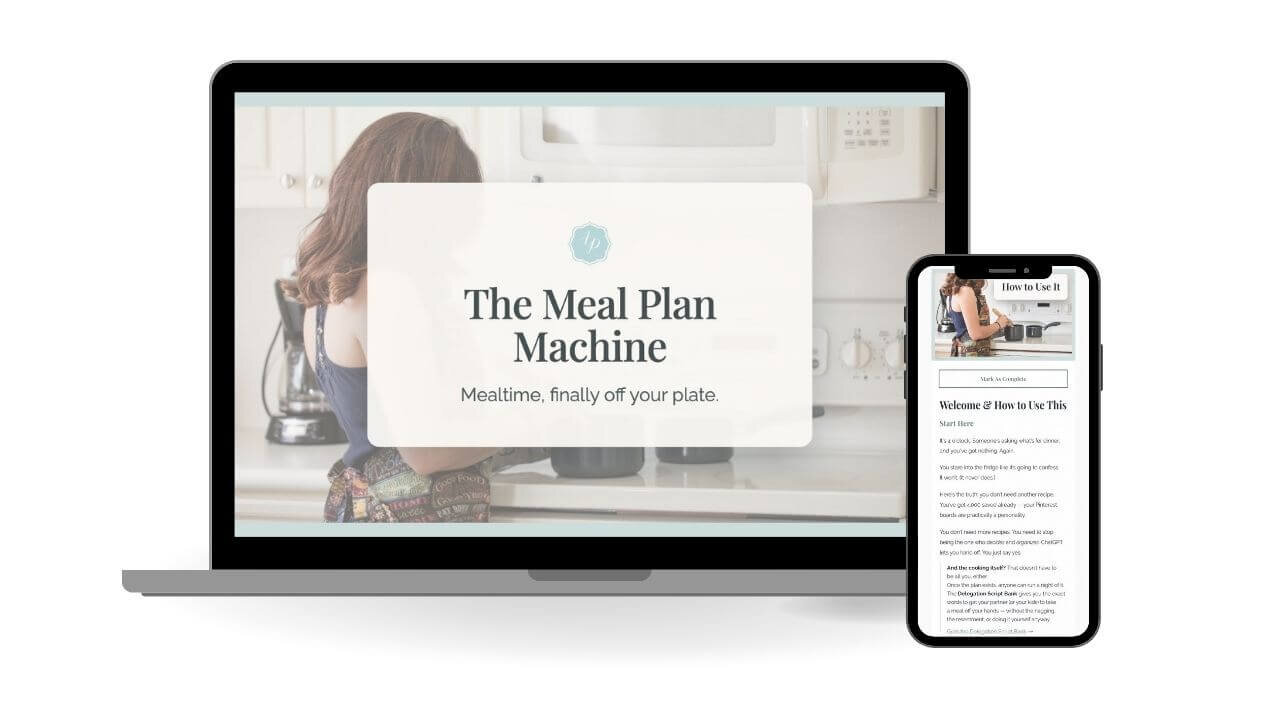
That’s where handing it off changed things for me. I tell ChatGPT my number and it plans meals to that budget, which is exactly what the ways-to-plan system is built to do. I bottled the budget version of that into The Meal Plan Machine, and the full walkthrough is in how to use ChatGPT for meal planning.
Stop being the one crunching the numbers
Saving money on groceries is really just planning on purpose, over and over. The tips work. The problem is you’re the one running them every single week.
That’s what The Meal Plan Machine takes off your plate. You hand ChatGPT your budget number and what your family eats, and it builds meals that fit, plus a grocery list sorted by aisle so you shop fast and skip the extras. It works on the free version of ChatGPT and it’s $37, once. Picture a grocery week where the plan already fits your budget, the list is already made, and you didn’t have to do the math at the end of a long day. Your wallet and your brain both get to exhale.
Plan to your number with The Meal Plan Machine
FAQ
The cheapest approach is to plan meals around sales and what’s already in your kitchen, then shop a set budget with a list. Buying BOGO deals and freezing the extras stretches things further. Skipping the store entirely for pickup also helps, because you buy your list instead of your cravings.
For me, yes. Pickup keeps me from impulse-buying down every aisle and lets me watch the cart total as I add things, so I stay on budget. Even when a service slightly marks up items, the savings from skipping impulse buys usually make up for it.
It varies a lot by family size and where you live, so the right number is the one you set and can actually hold. The move that matters is picking a target and planning to it, not chasing someone else’s figure. Track it somewhere simple so you always know where you stand. If you want the budget planning done for you, The Meal Plan Machine plans to your number so you don’t have to.